
Archives
| F | S | S | M | T | W | T |
|---|---|---|---|---|---|---|
| 1 | 2 | 3 | ||||
| 4 | 5 | 6 | 7 | 8 | 9 | 10 |
| 11 | 12 | 13 | 14 | 15 | 16 | 17 |
| 18 | 19 | 20 | 21 | 22 | 23 | 24 |
| 25 | 26 | 27 | 28 | 29 | 30 | |
A year or so after Osho left the body in 1990, I was playing in Buddha Hall one evening for the meditation. I found myself looking out over a sea of celebrating meditators in white, with Osho’s empty chair in the distance on the podium. It was a moving experience that inspired this song, a tribute to the wonder and gratitude I felt in that moment. How many times had I heard Osho say, “My chair is empty. I am just a presence” and either didn’t understand or not quiet believe it? It is one thing to hear the master say this. It is quite another to get it. This night was something different. Something clicked.
The next days, I asked my musician friends — Bharti (keyboards), Disha (vocals), Sanjva (audio), Satgyan (bass), Sudhananda (vocals, second guitar), Teerth (drums) — to help me record the track. Digital mixing hadn’t arrived yet, so we had fun memorizing the track sequences and mixing it down by hand. It was a sweet project, the kind of creative thing one does for the sheer joy of it. The song always felt too intimate and personal for me to share, so it sat over thirty-five years on my hard drive. Recently, during one of my “spring cleanings”, I discovered it tucked away among some old files. At the nudging of a dear friend, I decided to release it to the winds, trusting it will reach where it is meant to reach. Meanwhile, enjoy this free download of the song: https://www.oneskymusic.com/empty-chair/.
“Milarepa, it is possible to become enlightened from anywhere, and a comfortable chair, particularly, is not a hindrance to it. Just don’t try my chair!” Osho, Transmission of the Lamp #22
Enjoy this free download of the song: .
“Milarepa, it is possible to become enlightened from anywhere, and a comfortable chair, particularly, is not a hindrance to it. Just don’t try my chair!” Osho, Transmission of the Lamp #22
To read more of my insights on the significance of Osho’s empty chair, click https://www.oneskymusic.com/the-empty-chair/
My dear friend, Darshan, let go of her body/mind last Saturday, August 15, after a long illness. Her insights from Reiki, Family Constellation, Meditation and Osho, helped many (including myself) navigate life’s challenges. Her work was her joy. It was straight to the point, from the heart, and centered in Love. We often hear the phrase “Man of Osho”. She was truly a Woman of Osho, through and through. She will be missed.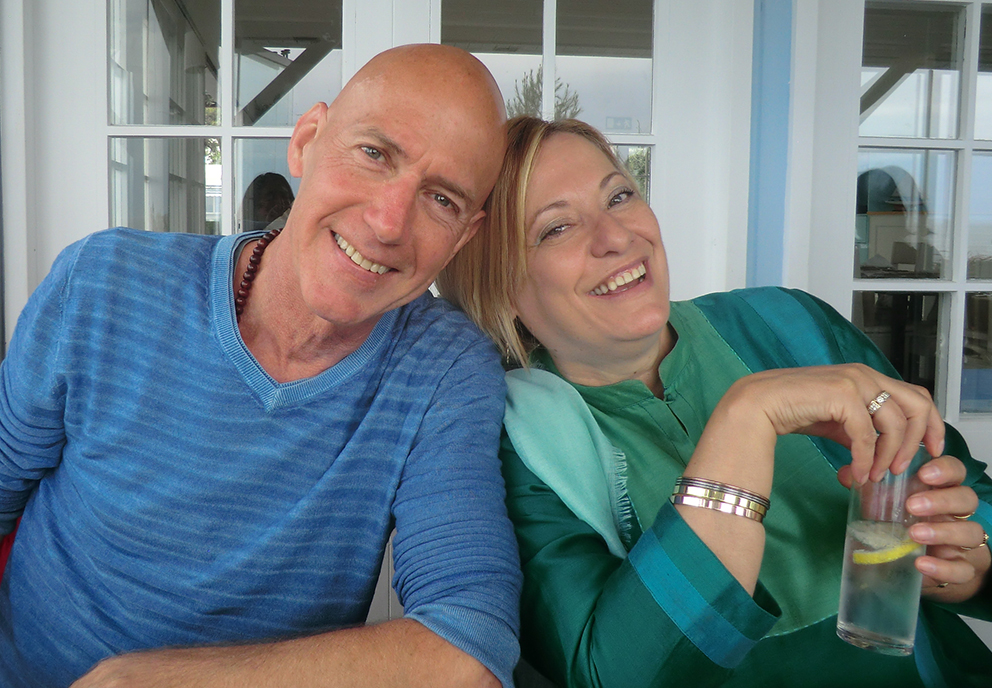
Bhikkhu just left the body. His beloved partner, Waduda, shares that whenever in their travels they met Buddist monks (bhikkhus), Bhikkhu would introduce himself as “Bhikkhu”. The monks, perhaps surprised he wasn’t wearing the tradition Buddhist monk garb, would invariably ask: “Which bhikkhu?” To which he would respond, “Osho Bhikku”. I find myself agreeing with Waduda’s assessment that, although he is technically an “Anand” (like myself), “Osho” is perhaps the most appropriate prefix for him. Osho Bhikkhu.
Together, they created New Earth Records with Osho’s blessings, along with many other creative endeavors. Most-importantly as I see it, they are responsible for making Osho’s meditations available to a wider audience, especially in the West. My collaboration with them gave flowering to one of most-loved compilations of Pune 2 discourse instrumental music, “Garden of the Beloved”.
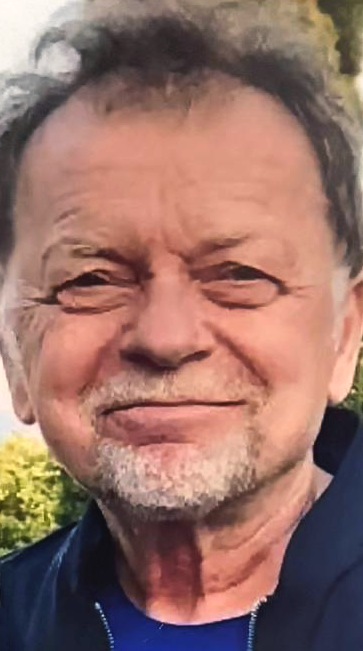
The only forwarding address I have for Bhikkhu is the empty sky. May this tribute find him there. Godspeed, my good friend. Rest in Truth.
OSHOFEST NEW YORK – A Gathering of the Buddhas
OCTOBER 15-18, 2026
The festival officially starts at 5pm Thursday evening, October 15, with Kundalini Meditation, followed by dinner and Evening Satsang with the band. Friday and Saturday will be full days of meditation (with breakfast, lunch and dinner). Sunday includes breakfast and officially ends at 1pm with lunch.
The Abode will generously open its doors Wednesday for those who like to come early and settle in. Note that the kitchen won’t be open until Thursday evening. But there are restaurant opportunities nearby. There will be a nominal accommodation fee charged by the Abode for Wednesday pre-arrivals.
The Abode of the Message (https://www.the abode.org) in Upstate New York is near the town of New Lebanon. It is a functioning Sufi community with a tranquil, peaceful atmosphere. It is surrounded by beautiful nature and walks. It has hosted some of our best Osho retreats in the USA since 1995. Founded by Pir Vilayat Inayat Khan, credited with introducing Sufism to the West, the Abode has been a Sufi community since 1975. They have offered us one of their prime autumn weekends, just when the Fall colors in the Berkshires will be at their peak. If you have ever been there in October, you know how magical this can be.
This will be a full band event with Chandira (bass and keyboards), Lee (saxophone), Sofia (flute), Teerth (drums), me, and a great sound system!
The cost is $540 per person. This includes accommodation, breakfast, lunch, and dinner. For booking, contact oneskymusic@gmail.com / +1 (203) 4346754 (only WhatsApp please).
This festival will truly be a gathering of the buddhas. Don’t miss it!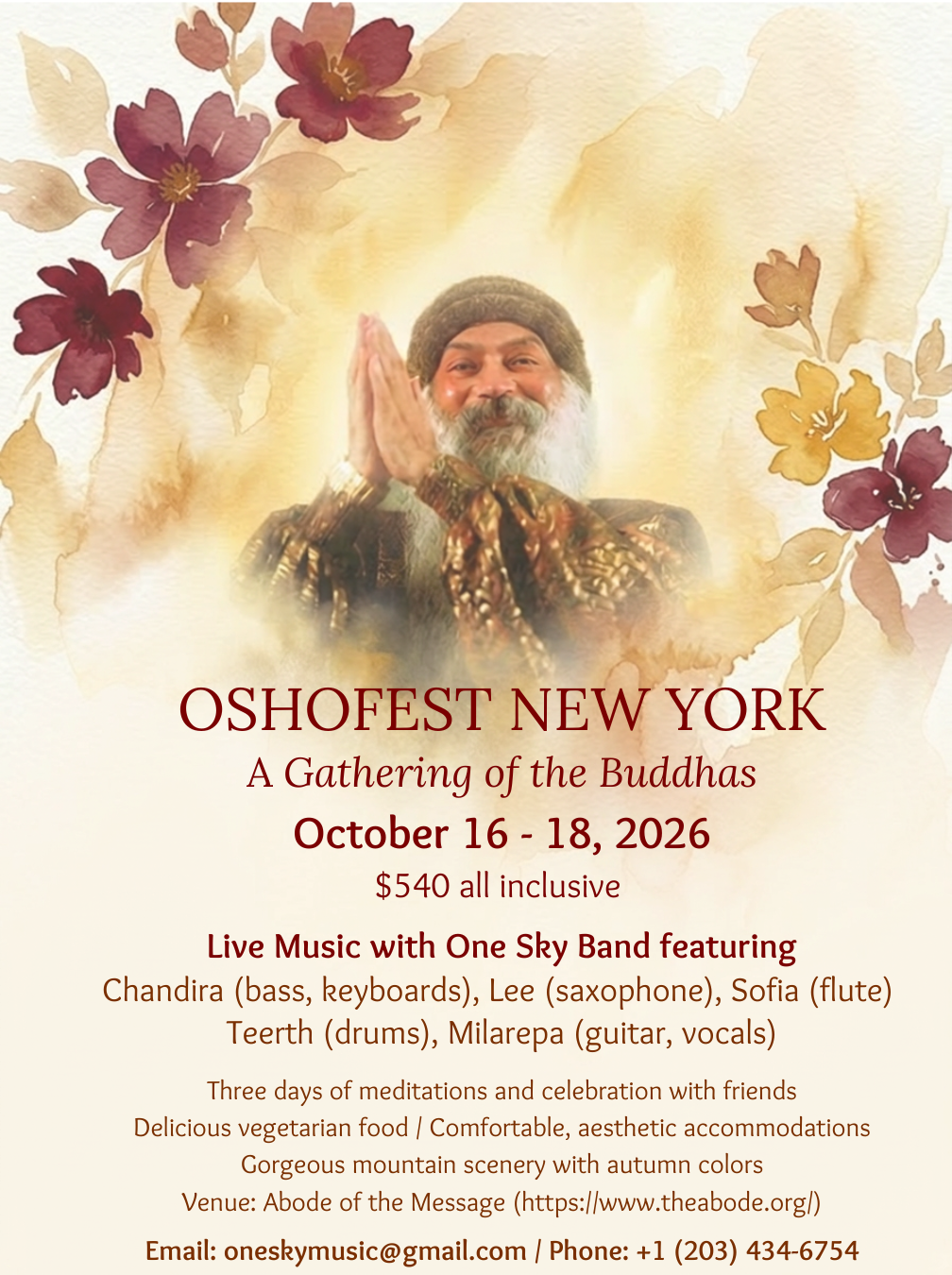
A Tribute To Amareesh
I never knew anything about Amareesh’s past.
I experienced him as a very much in-the-moment kind of guy.
He never talked about his past.
He never talked about what he had done, nor who he was, before meeting Osho.
I sensed his current life with Osho was what mattered most.
Amareesh was something of a genius.
Perhaps he had no formal musical training (I don’t know this for sure).
He understood music intuitively.
Its rules and structures didn’t limit him.
However, it made him unpredictable.
Spontaneously, unexpectedly, in any given moment, especially in Osho’s presence, he could take off and soar as if in a limitless sky, unbounded.
This was his quality.
I met Amareesh for the first time in early 1987 in Pune, India.
He shared he was a musician, but that he also knew something about sound engineering.
As Osho was about to begin speaking in Chuang Tzu Auditorium, it was an urgent position that needed filling, and Amareesh volunteered to help.
Osho requested that there be music for both his entrance and exit.
Aside from recording the discourses, Amareesh’s job would also be to mix live sound for the music.
After a month or so, Jalal and Pashupati took over the audio responsibilities while Amareesh joined the pool of rotating musicians.
Digital recording was just coming into vogue.
Jalal had procured a portable Sony DAT recorder and the recording process shifted away from the primitive cassette tapes we had been using.
I had a layman’s interest in recording.
I would spend my free time listening through the discourse tapes, collating the best-played music sections, and creating cassettes for our department to sell in The Bookshop.
These music tapes were popular.
Titles such as “Open Window”, “The Rains Have Heard Me”, “Yes To The River” were the beginning of a kind of cottage industry that gave our department an income to acquire items needed to bring the music to a higher standard.
When the new Buddha Hall was ready, the discourses shifted over from Chuang Tzu Auditorium.
Sanjiva replaced Jalal and Pashupati as the music’s audio technician (their focus became solely recording Osho).
Around this time, we began using a Sony PCM analogue/digital converter that worked in tandem with VHS cassettes.
This enabled us to record in CD quality.
Amareesh continued joining the discourse music from time to time.
There are memorable tracks of him playing on “Garden of the Beloved” (seven to be exact), excerpts I have used in the slideshow tribute.
In late 1991, a year and a half or so after Osho left the body, I moved out of the Commune.
I had still been coordinating the music up to this time, but I needed a break and suggested Miten take the reins.
I continued playing from time to time in Buddha Hall, but the world was calling.
I began traveling for extended periods outside India with the tours and recording.
Whenever I was back in India, I would occasionally meet Amareesh in passing, mostly outside the Commune, sharing a few laughs and updates on our lives.
The last time I saw him was on the Nulla Park Road behind the back gate where everyone parked their bicycles.
It was pleasant, as always, like having a metaphorical cup of tea together.
More than anything, our connection was Osho and this silent knowing was always felt.
When I got news of Amareesh’s passing, I had an intention to make a tribute to him.
However, aside from the short epitaph I wrote for www.oshonews.com, I somehow never got around to it.
In the years since, whenever I play tracks of his playing from “Garden of the Beloved”, especially at events, I am always amazed how beautifully they set the tone for meditation, such as Dynamic in the morning while participants are coming in.
Many times, people come up to me afterwards asking: What is this music?
Without ever having known Amareesh, they are touched by his playing and feel Osho through it.
Whenever I hear him, I reminded of that same silent knowing, heart-to-heart, that still connects us.
Timeless. Eternal. Osho.
The seven tracks in the video tribute are available on “Garden of the Beloved” (a hand-picked collection from Waduda and Bhikku of some of the best discourse music from 1987-1988).
While it is no longer available through their New Earth Records, it can be accessed via www.osho.com.
Amareesh plays flute on everything except “Seashore of Eternity,” on which he plays dilruba.
He can also be heard strumming the swarmandal (amazingly, he could strum and play flute at the same time!).
Other musicians on these tracks include: Bharti (keyboards), Gayan (tampura), Kamal (bass, keyboards), Mali (drums), Namateet (bass), Nivedano (drums, percussion, sample pad), Rupesh (tablas), Sudhananda (guitar), and myself (Milarepa—guitar, percussion).
Live audio mixing: Jalal, Pashupati, and Sanjiva.
One final note: In Pune Two, Amareesh had given me a photo of himself with Osho in Kathmandu, but I lost it.
When he left his body, I got in touch with his beloved, Shola, who had a copy.
She shared that Amareesh told her he could always feel Osho’s touch on his arm, and that this moment changed something in him.
Having played next to him on many occasions in Osho’s presence, my feeling is that a transmission transpired.
I say this because in certain moments of resonance, Amareesh, the disciple, would disappear and Osho, the master, became the musician.
Perhaps this contributes to the gratitude and love that shine through his playing.
Amareesh left his body on May 14, 2018.
He was a dear friend and man of Osho.
Oshofest 2026 in Dallas, Texas at the beautiful Osho Simran Meditation Center, April 3-5, was a joy from start to finish. Many thanks to the wonderful One Sky Band (Lee, Prabodh, Sofia, Teerth) and our special guest, Aneesha. Also, a big Texas-style thank you to Sangeeta, Anurag and Family for hosting the festival with grace and generousity. Kudos to all the delightful participants who poured their totality and hearts into the meditations, workshops, and celebration. Last, but hardly least, infinite gratitude to Osho for inspiration and lighting the way in.
Oshofest 2026
Where: Dallas, Texas
Date: April 3-5
Contact Sangeeta
Email:oshosimran2025@gmail.com
Phone:(214) 724-1991
The Osho Carnival of Life was created and filmed in 1992 to celebrate the occasion of Osho leaving-the-body. This January 19th marks thirty-six years.
The carnival was the brain-child of Mohi and Francesca. A large workshop was created in the Pune Commune (now called The Resort) where hundreds of people participated in a huge, energetic happening making all manner of costumes, floats, and rehearsing various acts. As you will see, even an elephant joined the party.
The video concept and editing was done by Loki, Vimal, and myself. It was “lost” for many years, but Bhikkhu from New Earth Records recently discovered it on his hard drive and shared with me. I did some additional restoration to get it to its original length. I don’t think I have ever seen so much joy gathered in one place!
Osho continues to inspire seekers from around the world. His “carnival of life” sends a powerful message to live a life of totality overflowing with meditation, love, creativity, and celebration.
Osho stopped speaking publicly on April 10, 1989, his last words being: “The last word of Buddha was ‘sammasati’. Remember that you are a buddha – sammasati.” The subsequent months were a series of darshans consisting of celebration and silent sitting.
Osho attended these as often as his health permitted. When not able to attend, Osho suggested playing discourse videos as a way for his people to stay connected with him. It became more obvious as months went on that he was preparing us for a time he would no longer be with us physically in the body.
The format of the darshans slowly evolved into a three-stage meditation known as Evening Satsang With The Master, also known as the Osho White Robe Brotherhood. Night after night, Osho was honing the stages, especially the second stage. In the beginning, Osho would sit in silence for about ten minutes, then open his eyes, get up, and go out dancing. Initially, the music would play through these times he was in his chair. One particular evening, Osho’s hands suddenly began moving, gently keeping time to the music, and before the musicians knew it, he had raised his arms skyward as if raising the collective energy, all the while keeping time to the music. One particular evening, he suddenly clapped his hands together high above his head, signaling a stop. Unsure of what was happening, we (the musicians) played on. It was a situation we felt terrible about afterwards because we had not followed his direction. We decided that if he did it again the next night, we would stop with him. Alas, it happened again! This time after the stop, Osho brought his arms down and rested his palms on his lap. Lo and behold, after a few minutes, he started moving his hands again, and then his arms! Up they went, as did the music, to a peak, and again he stopped. This sequence happened a third time. After a few minutes, he opened his eyes, got up, and started celebrating with the hall. This format crystallized and eventually became the Music/Silence Stage we know today. Osho asked Nivedano to keep the time, and after ten minutes, he should hit his drum three times.
The musicians asked for a video feed and monitor from Nishkriya. Since we were sitting far back in the hall, it helped us see Osho’s movements (and his dancing!) and follow him better.
This music/silence sitting became quite wild with each progressive night. Osho would move his arms and hands in the most amazing ways — always giving and raising energy, which would deepen and intensify the gaps of silence. As everyone in Buddha Hall had their eyes closed, no one except the musicians could see what he was doing. At some point, Nishkriya set up a video monitor in the Book Store to play the previous night’s darshan so people could witness for themselves this amazing spectacle.
Another beautiful phenomenon developed whereby at the darshan’s end, Osho would get into his car, and people would rush to the perimeter of the hall. Osho would have Avesh drive slowly, and there was this lovely, sweet namaste communion that happened. During this time, the musicians would continue to play, grooving and jamming. One such track comes at the end of this clip, accompanying a few iconic photos of Osho from the darshan evenings.
Darsana is the Sanskrit root of the word ‘darshan’. It literally means “to see” or “to behold”. It is often used in a reciprocal sense to describe the melting of energies that occurs in the presence of the master.
Waduda and Bhikkhu made this footage available, formatting it with title and quotes. I did some additional editing of the soundtrack and added the ending. The live track can be heard on the CD “Lion’s Roar”. It is one of four tracks from this unique time, the last months Osho was in the body. It is available as a free download here: https://www.oneskymusic.com/instrumental/
This clip is a New Year’s reminder to live life to its fullest; not to take a single moment for granted; to live a life of joy, love, laughter, and celebration. It is one of the last darshans with Osho before he left his body, January 19, 1990.
Beloved Friends,
First of all, Happy New Year! 🎉✨
It promises to be an exciting, nourishing year of music, meditation, and celebration.
We have a great line-up for Oshofest Dallas this year:
Sofia–flute and vocals
Lee–saxophones
Milarepa–guitar, vocals
Prabodh–bass
Teerth–drums
And special guest, Aneesha Dillon
Join us for this Spring awakening, an inner reset in the best sense of the word.
The dates are April 3 – 5.
Plan to arrive Thursday as the event will start first thing Friday morning with, you guessed it, Dynamic Meditation!🙌💥🙌
Mark your calendar!
Book early!!
This is going to be amazing!!!
Details:
Osho Simran Center, Dallas, Texas
Contact: Sangeeta (phone 214-724-1991) (oshosimran2025@gmail.com)